
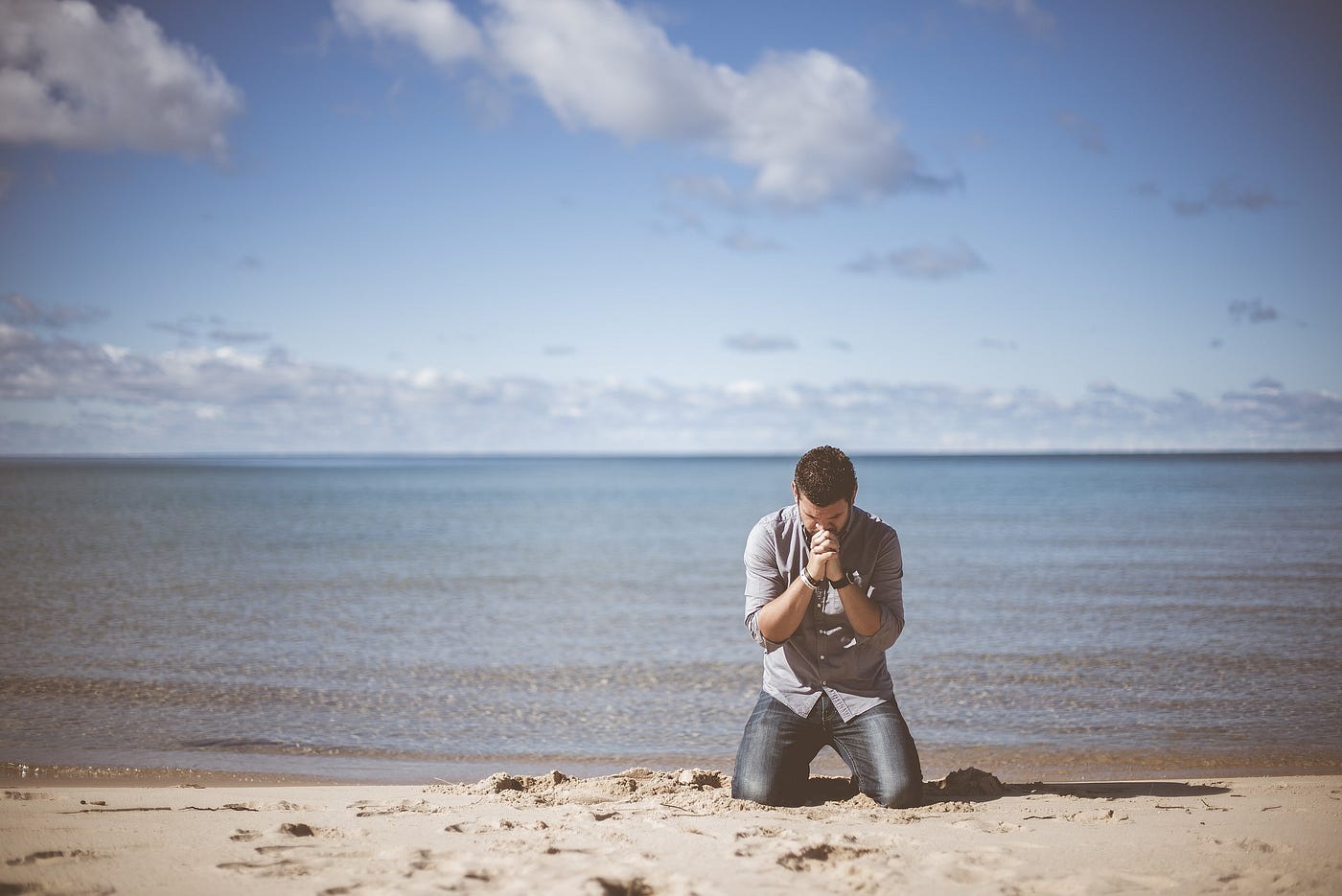
A child gets cancer.
A loving husband loses his wife in a car accident.
A single mom trying to do everything right is barely scraping by—while someone cheating the system lives in luxury.
We all feel it: This doesn’t seem fair.
And it’s led many to ask one of life’s most painful and honest questions:
Why do bad things happen to good people?
What Do We Mean by “Good”?
We usually ask this question when we see someone kind, generous, or selfless suffer. “They don’t deserve that,” we think. “They’re a good person.” And to be clear, I get it. I’ve thought the same thing.
But that question assumes something deeper: that there’s a clear line between good people and bad people. And that if God is out there and is truly just, good people should be protected.
One day a religious leader came to Jesus and called Him a “good teacher.” Jesus responded in a way that might seem a little strange:
“Why do you call me good?” Jesus asked him. “Only God is truly good.”
— Luke 18:19 (NLT)
Jesus wasn’t denying His goodness—He was challenging the man’s assumption. What is good, really?
See, the Bible teaches that none of us are truly good—not compared to God’s standard. Not because we’re all terrible people, but because we’ve all missed the mark.
We’ve all chosen things we knew we shouldn’t. We’ve hurt others, intentionally or not. We’ve taken our lives—beautiful and full of purpose—and often used them in ways they weren’t designed for.
A World That’s Not How It Was Meant to Be
From the beginning, God gave humanity the ability to choose. We can choose His ways—or our own. He created us with purpose, love, and freedom. But from the very beginning, people chose their own way.
And when we do that, things break.
There’s a verse in Proverbs that says:
There is a path before each person that seems right, but it ends in death.
— Proverbs 12:14 (NLT)
In other words, not everything that feels right is right. And we’ve all walked paths like that.
I like to think about it like this: when the screwdriver was invented in the 15th century, it was revolutionary. It allowed people to fasten things together in a strong, reliable way.
But it didn’t take long before people started using screwdrivers for all kinds of things—digging holes, prying things open, even trying to hammer with the handle. And what happens when you use something outside of its design? Things get broken.
That’s the human story. We’ve used our freedom outside of its intended purpose. And that misalignment leads to pain—not because God is angry and punishing us, but because we’re living in a way that’s outside of what’s best.
What Happens When We Choose Poorly
There’s a famous line in Indiana Jones and the Last Crusade. A man chooses the wrong ancient cup, drinks from it, and immediately dies. The guardian of the temple solemnly says, “He chose poorly.”
It’s a bit dramatic, but the point lands.
When we live outside of God’s intended design, when we go our own way, things don’t work the way they should. And here’s the hard truth: our world is full of generations of these kinds of choices—billions of small acts of rebellion that ripple into the next moment, the next generation, the next century.
Like a child who touches a hot stove after being told not to—the pain isn’t punishment. It’s just the reality of what happens when you go against what was meant to protect you.
But This Isn’t the End of the Story
If the story ended there, it would be bleak. But it doesn’t.
The same God who gave us the freedom to choose… also chose us.
But God showed His great love for us by sending Christ to die for us while we were still sinners.
— Romans 5:8 (NLT)
God didn’t stay distant from the mess. He entered it. He didn’t look at our brokenness and pull away—He stepped in.
That’s what the life, death, and resurrection of Jesus is all about. Not just religion. Not just morality. Rescue.
Why Does God Still Let Bad Things Happen?
Sometimes, God intervenes. Miraculously. He heals. He protects. He provides in ways that can’t be explained.
Other times… He doesn’t.
That’s hard. But it doesn’t mean He’s absent. It means we still live in a broken world—one that hasn’t fully been restored yet.
But restoration is coming.
A Glimpse of What’s to Come
The Bible ends with a promise—not just of heaven, but of wholeness. One day, God will fully restore everything.
“See! God’s home is with men. He will live with them. They will be His people… God will take away all their tears. There will be no more death or sorrow or crying or pain. All the old things have passed away.”
— Revelation 21:3–4 (NLV)
That’s the future. That’s what God wants for us—not just one day, but starting now, through a relationship with Him.
Maybe There’s a Better Question
We began by asking, “Why do bad things happen to good people?”
But maybe the deeper question is this:
Why would a perfect God offer grace, healing, and hope to people who’ve ignored Him?
That’s what’s truly shocking.
God doesn’t owe us anything. Yet He offers everything.
Not because we’re good enough. But because He is.
Final Thought
Maybe you’ve felt this tension—suffering, injustice, the brokenness of the world—and wondered where God is in all of it.
You’re not alone.
But the story of Scripture isn’t about people trying to be good enough for God. It’s about a God who’s good enough to rescue us—even when we’ve made a mess of things.
And He’s not done yet.